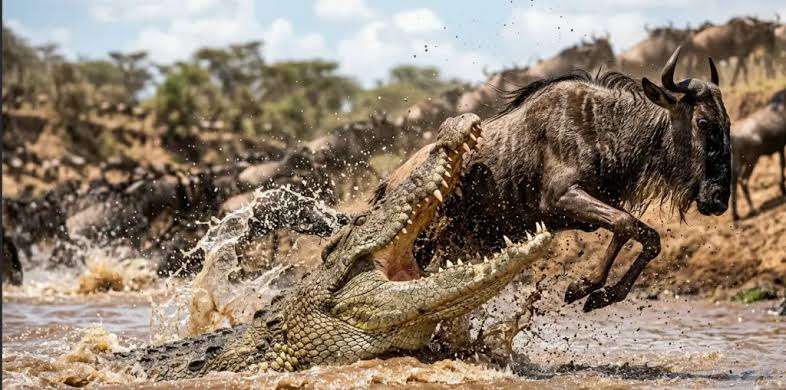
Over two million wildebeest, zebra, and gazelle move in a rough annual circuit across the Serengeti ecosystem. Here's roughly where they are each month.
📍 Calving: Ndutu, Jan–Feb🐊 Mara crossings: Jul–Sep🌱 Quietest months: May–Jun, Nov
Travel Guide Overview
Where the Herds Are, Month by Month
The Great Migration isn’t a single event on a fixed date—it’s a year-round movement driven by rainfall and grass, so timing shifts a little every year. What follows is the typical pattern, grouped by season, so you can see roughly where the herds should be for the month you’re considering. We track conditions closely and will always give you our current best estimate for your actual travel dates.
1. Calving season — January to March
January: Herds concentrated on the short-grass plains of the southern Serengeti and Ndutu, calving underway.
February: Peak calving—up to around 8,000 calves born a day at the height of the season—with the highest predator density of the year following close behind.
March: Calving continues as the long rains begin; herds start drifting northwest toward central Serengeti.
This is the best window for predator action and newborn wildlife, in warm, mostly dry weather.
2. The long rains push north — April to June
April: Herds move through central and western Serengeti as the rains peak; landscapes are at their greenest.
May: The herds gather in the west toward the Grumeti River, with early river crossings that are far less crowded than the Mara’s.
June: Rains ease, and the herds begin turning north toward the Lamai Wedge and northern Serengeti, with rutting (mating) activity picking up.
Green, quiet, and photogenic, with genuine river-crossing drama at the Grumeti for those who time it right.
3. Mara River crossings — July to September
July: Early crossing attempts begin at the Mara River in the far north; the atmosphere is remote and dramatic.
August: Peak crossing season—thousands of animals cross the Mara River in a single day at its most intense.
September: Crossings continue as herds push toward the Kenyan border into the Masai Mara, with excellent game viewing throughout.
The most famous and most photographed phase of the migration, and also the busiest and most heavily booked months of the year.
4. The return south — October to December
October: Herds begin moving back south through northern and central Serengeti as the dry season ends; game viewing stays excellent with slightly fewer crowds than August.
November: The short rains arrive, greening the landscape as the herds continue south; a quiet, good-value month with far fewer vehicles.
December: Herds arrive back in the southern Serengeti and Ndutu area as the next calving season begins.
A lower-key phase, good for travelers who want migration context and scenery without the peak-season crowds.
How to time your safari around the migration
There’s no single “best” month for the migration—only the best month for what you specifically want to see:
Want a river crossing specifically? Aim for late July through September in the northern Serengeti, and build in a few flexible days—crossings don’t run on a schedule
Want calving season drama? Book Ndutu and the southern Serengeti for late January through February
Want fewer vehicles at every sighting? Travel in May, June, or November, when the migration is still moving but the crowds thin out
Not fixed on the migration at all? Ngorongoro Crater and Tarangire hold resident wildlife year-round, migration or not
Ready when you are
Migration timing shifts a little every year, and the difference between a good sighting and a great one often comes down to which camp you’re based at that week.
We track conditions and advise on your actual dates
Local TipCrossings don't run on a fixed schedule—herds respond to rainfall and grass, not a calendar. Build a few flexible days into a July–September itinerary rather than pinning everything to one date.
No—it's driven by rainfall and grass growth, so timing shifts by a couple of weeks most years; what's above is the typical pattern, and we track current conditions before recommending your camp.
August is the most reliable single month for Mara River crossings, though July and September also see strong activity with fewer crowds.
No—the same herds spend most of the year in Tanzania's Serengeti ecosystem, including the dramatic Grumeti River crossings in May and June, well before they reach the Kenyan border.
Very much so—late January through February in Ndutu offers some of the most reliable predator action of the year, independent of any river crossing.
You'll still see resident wildlife year-round in Ngorongoro Crater and Tarangire, and quieter migration-adjacent months like May, June, and November often deliver excellent sightings with far fewer vehicles.
Request Advice
Time Your Safari to the Migration Free
Share your dates, interests, and travel style. We will reply with practical advice and a route recommendation.