A practical, Tanzania-specific packing list—what to bring, what to leave behind, and two rules that are actually the law, not just tradition.
Overpacking is the most common safari mistake. Laundry service is available at most lodges and camps, luggage space in safari vehicles and light aircraft is limited, and a few packing choices in Tanzania aren’t just style—they’re the law. Here’s what actually earns a place in your bag.
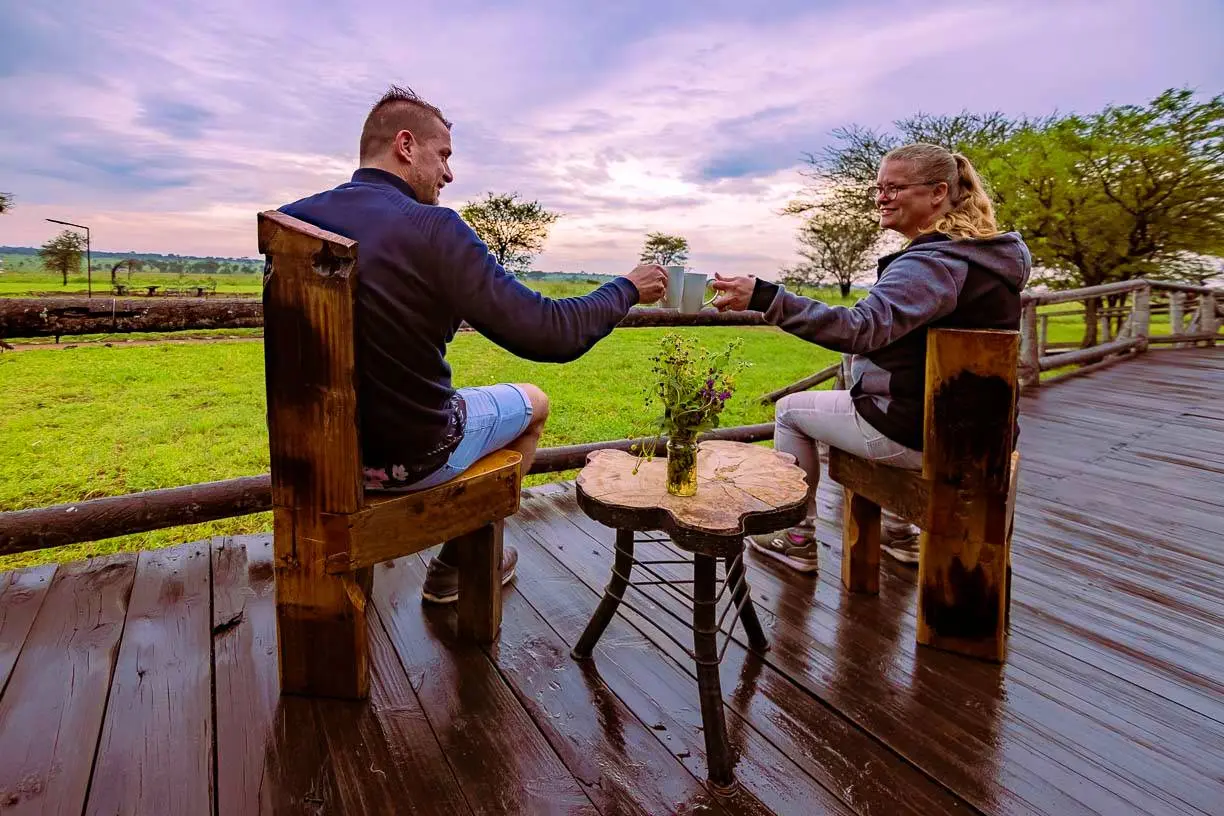
Pack in neutral earth tones—khaki, tan, olive, and sage—rather than bright colors, white, or black; tsetse flies are drawn to dark and bright colors, and neutral tones also blend better for wildlife photography. Mornings on game drives can be genuinely cold, especially in an open-sided vehicle before sunrise, so bring a fleece or light jacket you can shed as the day warms up. Lightweight, breathable long sleeves and trousers cover you from both sun and insects better than shorts and t-shirts.
Camouflage-patterned clothing—jackets, trousers, hats, even bags with camo trim—is illegal for civilians in Tanzania and reserved for military use. Customs can and does confiscate it at the border, so double-check jackets, backpacks, and even phone cases before you pack.
A pair of binoculars is the single most useful item most first-time safari-goers forget; your guide’s are usually shared among the whole vehicle. Bring a camera with some zoom reach if photography matters to you, a dust-proof way to store it, and more memory cards and batteries than you think you’ll need—charging opportunities can be limited on multi-day camping routes. Tanzania uses Type D and G plug sockets at 230V, so bring the right adapter.
Your passport should be valid for at least six months beyond your travel dates. A yellow fever vaccination certificate is only required if you’re arriving from or transiting through a country with yellow fever risk—flying direct from Europe or the US does not trigger this requirement, but connecting through Nairobi, Addis Ababa, or Kigali does. Talk to a travel clinic about malaria prevention well before you travel, and pack any personal medication in its original packaging with a spare day’s supply in your daypack.
If any part of your itinerary uses light aircraft between parks, pack in a soft-sided duffel bag rather than a hard suitcase—rigid cases often don’t fit the cargo hold. Combined luggage weight (main bag plus daypack) is typically capped around 15kg per person on these flights, so pack light and plan to leave anything you don’t need for the bush at your first hotel or with us.
Pack light, dress in layers, and let us handle the rest.
Send us your itinerary and we’ll tell you exactly what that specific trip calls for.
Share your dates, interests, and travel style. We will reply with practical advice and a route recommendation.