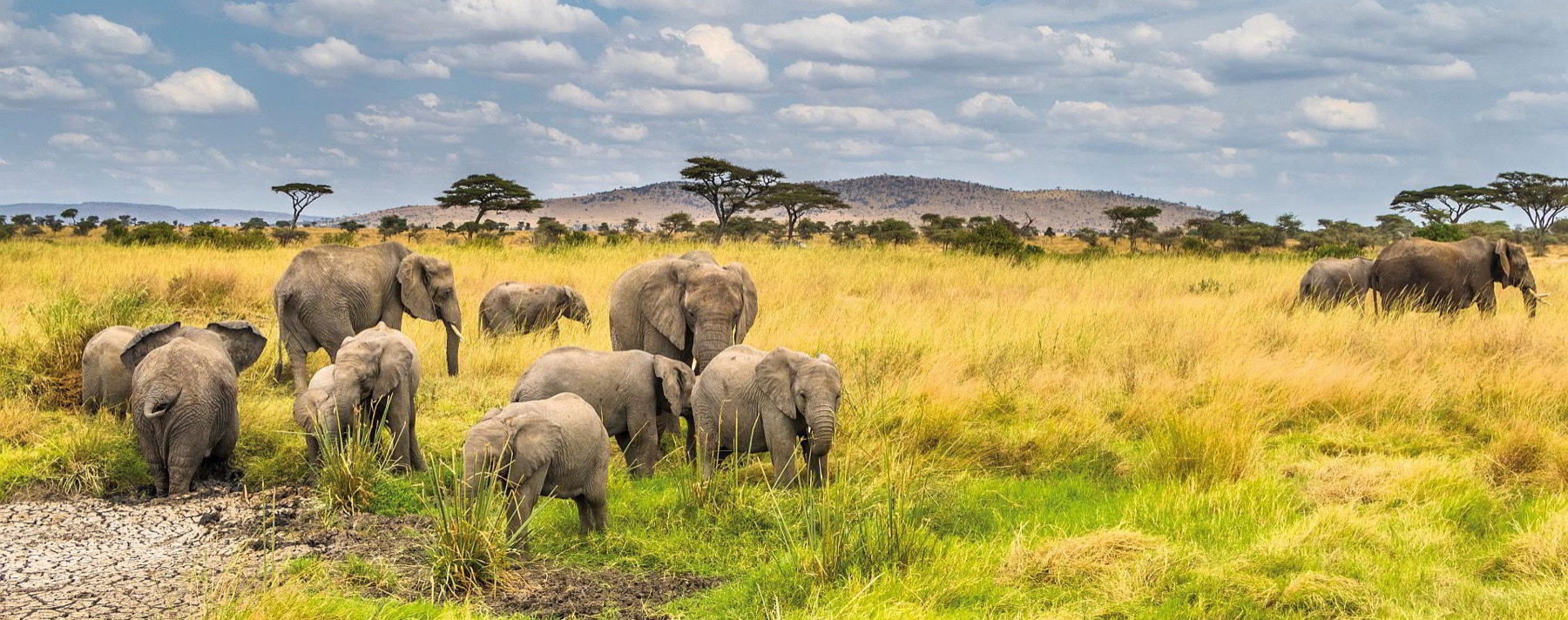
Tanzania has two real seasons, not twelve. Once you know which one matches what you want to see, choosing your travel month is simple.
Tanzania’s calendar really comes down to two seasons, not twelve confusing months. Once you know which one matches what you want to see—classic dry-season game viewing, green-season color and quiet, or a specific event like calving or a river crossing—picking your travel month gets a lot simpler.
June through October is Tanzania’s long dry season and the classic safari window. Grass shortens across the plains, vegetation thins out, and animals concentrate around the rivers and waterholes that remain, making game viewing easier and more predictable in Serengeti, Ngorongoro, and Tarangire. Skies stay mostly clear and mornings are cool enough for a fleece. This is also when the Great Migration’s Mara River crossings happen in the north (see our month-by-month migration guide for the detail). It’s the most popular and most booked window of the year, so accommodation fills up months ahead, especially in July and August.
November through May is Tanzania’s green season, split by a short, mild rainy spell in November and December and a longer, heavier one from March to May. Rain tends to fall in short afternoon downpours rather than all-day drizzle, and mornings are usually clear. The landscape turns lush and photogenic, birdlife explodes with migratory species, and lodges drop their rates, often by 20–40%, with far fewer vehicles at each sighting. The trade-off is that some park roads get muddy and a handful of camps close in April, the wettest month.
Tucked inside the green season, late December through February brings a short dry spell to the southern Serengeti and Ndutu area, right when roughly half a million wildebeest calves are born within a few weeks of each other. Predator action is intense and reliable, the weather is warm and mostly dry, and it’s a good alternative to the July–August crowds if you’re chasing drama rather than a specific river crossing.
If you’re pairing your safari with a Kilimanjaro climb, the driest and most stable windows are January to mid-March and June to October; the summit sees more snow and cloud during the April–May and November rains. For a Zanzibar beach extension, June–October and December–February are driest and calmest, while the southeast monsoon picks up in July–August with stronger wind—good for kite surfers, less ideal for lounging.
April and November carry the heaviest rain on the mainland; some Ngorongoro Crater and Serengeti roads can get slick, and a handful of camps close for maintenance in April specifically. Neither month rules out a safari—game viewing continues and prices are at their lowest—but pack for mud and expect a shorter list of open camps to choose from.
Whichever season fits your trip, we’ll match your dates to the right parks and pace rather than the other way around.
Share your travel dates and we’ll tell you honestly what to expect.
Share your dates, interests, and travel style. We will reply with practical advice and a route recommendation.